


Lipid Chemistry (16:400:505)
Prerequisite: 16:400:513 or permission of instructor
Time & Place: Tues/Thurs 3:00-5:00
Instructor:
Karen M. Schaich, Sc. D.
schaich@sebs.rutgers.edu
65 Dudley RD, Room 315D
(848) 932-5454
(732) 932-6776
(Revised Spring 2022)
COURSE INFORMATION:
Objectives of course:
- To provide a comprehensive information base of fundamental chemistry and physics of lipids necessary for basic research, product development, and product trouble-shooting. Strong performance in this course should qualify students for industrial positions in lipid chemistry, regardless of their thesis research topics.
- To develop high level skill and sophistication in critical thinking, integration and extrapolation, and problem solving.
- To introduce scientific and scholarly literature resources of lipid chemistry.
Requirements of course:
Format: All classes are virtual via Zoom, attendance is expected for lecture and required for problems; lectures will recorded and posted in Box for reference and review For most weeks, on Thursday new material will be covered in lecture and an application problem will be assigned, posted on Canvas. Solutions to problems will be written out and are due on the following Tuesday. Submit written solution on Canvas and be prepared to present in class. Tuesday classes will discuss problem solutions and problem-solving strategies using material from lectures. Sometimes material from several closely-related lectures will be combined for the problem sets. Problems progressively build on information during the semester, so later problems will also require application of concepts and details learned in earlier lectures.
Study guides with questions covering what should be considered “working knowledge” in lipid chemistry will be posted with each lecture. These questions are not to be handed in, but should be reviewed seriously by the students. Final exam questions will be similar to these study questions.
Most of the semester you will spend thinking and applying. Then to solidify what you have learned about lipids, the final exam will be a take-home comprehensive exam based on fundamental concepts and the questions in the study guides. If the study questions are answered as the semester progresses, the final should be easy to complete
Grade basis:
Pointers for solving problems
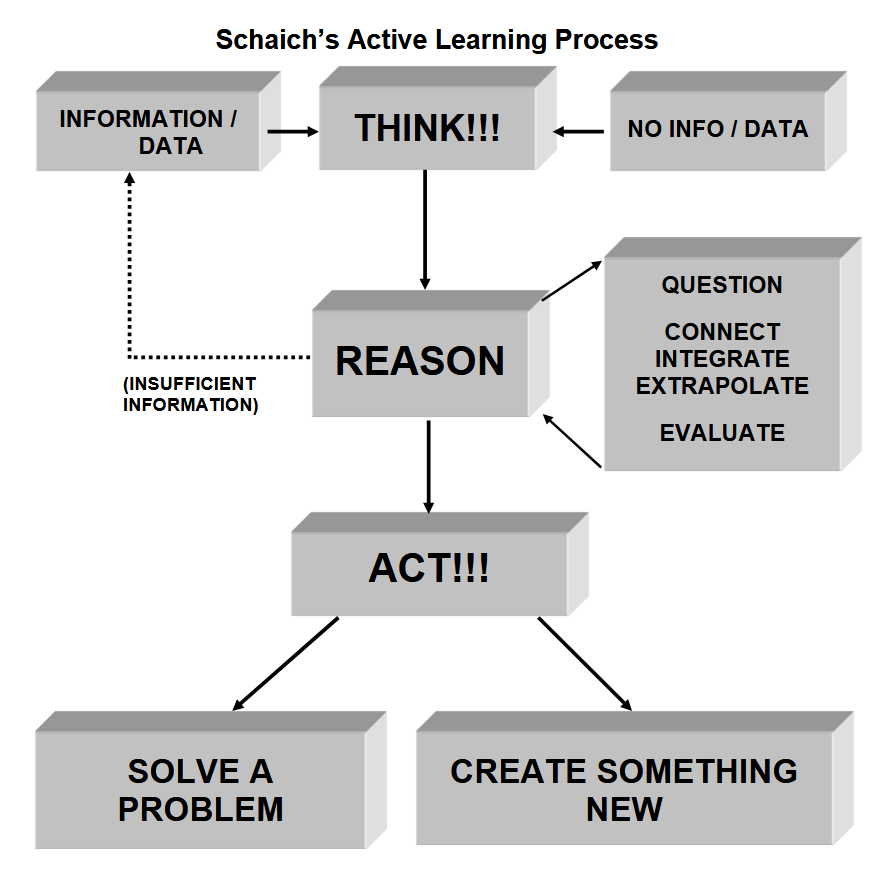
- Think first, apply what you know, look up later. You have a tendency to go look for the correct answers, but in real life situations there are no CORRECT answers -- only workable ones
- Think molecules rather than systems, and think quantitatively rather than descriptively. For example, rather than just saying the mp would decrease, think how much the mp would decrease and what fatty acids or modifications would give that decrease
- Question everything. Take nothing for granted
- Make a plan. Start by identifying the important issues or factors, and then use this to focus your strategies for solving the problem.
- ALWAYS identify what information is missing, either in the written problem or your knowledge. The former will tell you what questions to ask, the latter is something you need to look up. This applies in life as well as in this class.
- EXPLAIN YOUR REASONING for each step of the solution. This helps validate what you propose.
PROBLEM-SOLVING STRATEGIES
- Decide/determine what the question REALLY is.
- What fundamental information is needed to answer or solve the question?
- What chemical or physical properties are involved?
- What reactions are involved?
- What system properties are involved?
- What other issues may affect the outcome?
- What information do you already have that may be relevant to the problem?
- What is your system?
- What are its properties?
- What is the environment?
- What resources are available to work on the problem?
- What does this information tell you about the actual or potential behavior in the system under question?
- How do your system properties control its behavior?
- What can you expect to happen if you change components or conditions?
- What additional information that you do not have will you need to solve the problem? Where can you get that information --
- Books and publications
- Experts in the field
- Suppliers
- Research
- How can you fit everything together creatively to solve the problem? Don't overlook the obvious and conventional approaches, but also always try to THINK OUTSIDE OF THE BOX!
Goal 1 of this course
Learn to think of lipids as molecules.
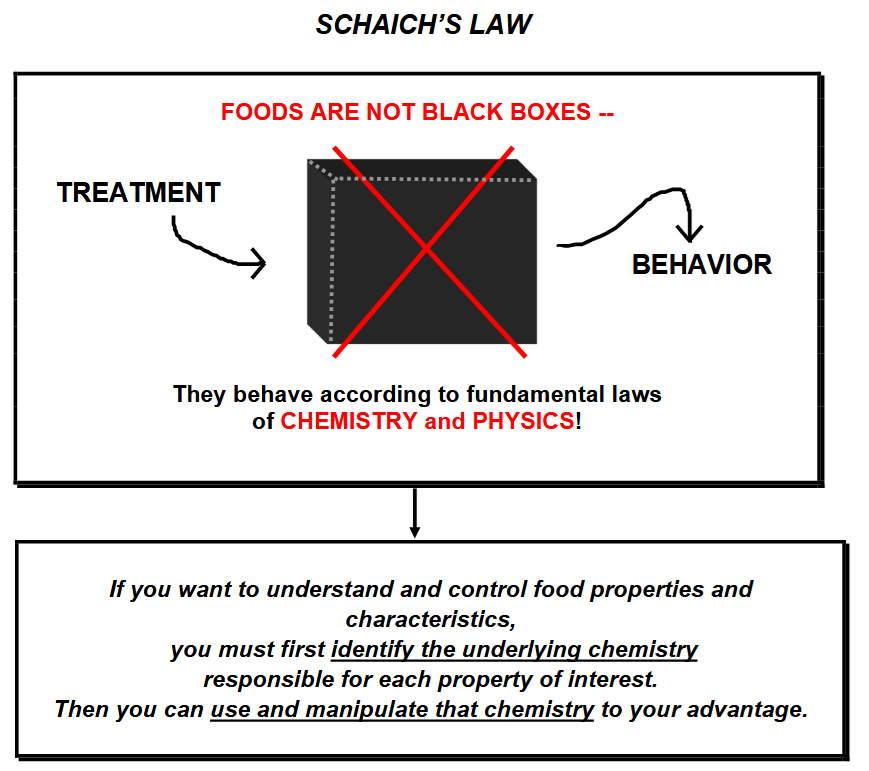
Goal 2 of this course
Learn to think and reason with information rather than just memorize facts.
ACADEMIC INTEGRITY
All students in this course will be expected to uphold the highest standards of academic integrity in all forms. Cheating and dishonesty will not be tolerated.
Students may discuss problem assignments but must write up their own answers – no copying. Students are expected to do their own work on the final exams – do not use past exams, do not discuss exam questions with others, do not copy answers or share answers, do not ask for assistance with exam from anyone else
The following are examples of academic dishonesty listed by West Los Angeles College. They should apply in any university and will provide the minimum standard for this course:
Plagiarism
- Submitting someone else’s scholarly work, such as essays, term papers, extra credit projects as your own.
- Copying, in part or in full, someone else’s assignment.
- Including in your work the ideas or language of another author without proper citation.
- Including in your work information downloaded from the Internet without proper citation.
Cheating
- Consulting concealed notes during a quiz, test or exam given in class.
- Using unauthorized prepared materials during a quiz, test or exam in class.
- Receiving information or answers from another individual during any quiz, test or exam (in class or take home)
- Copying information or answers from a classmate’s paper, report, or from any exam.
- Using electronic devices that have not been authorized by the instructor during a quiz, test or exam in class.
- Inventing data for a laboratory experiment, case study, or extra credit assignment.
- Submitting work prepared previously for another course.
- Talking during a quiz, test, or exam given in class or consulting with any other persons (students, faculty, professionals, etc.) during take-home exams. You may, however, ask the professor for clarification of exam questions.
Other examples of academic dishonesty:
- Providing your work for someone else to copy.
- Turning in someone else’s work.
- Allowing a fellow student to use answers on your paper during a quiz, test or exam or any other assignment.
- Using “cheat sheets” of any kind on in-class exams unless specifically allowed
- Showing a fellow student your paper during an exam or quiz (take home or in class), or passing information in any way.
- Purposely allowing a classmate to copy your original work product, such as answers to assignments, lab reports, term papers, etc.
- Stealing tests or examinations or using exams given in previous years to provide your answers.
- Removing tests or exams from a campus facility without the permission of the instructor.
- Looking at a fellow student’s paper during an exam or quiz, in class or take home.
Violators of Academic Integrity policies will be subject to stringent disciplinary action. According to University policy, students caught cheating will be reported to the Dean and taken before the Judicial Board. Although the Board decides the punishment with relation to Rutgers University (e.g. total expulsion), the Food Science Dept. has a No Tolerance policy toward cheating. Thus, as noted above, at a minimum, students caught cheating may receive an F for the course, be ejected from the Food Science program, and also face the possibility of expulsion with CHEATING marked on your transcript. This also applies to students auditing the course.