


Principles of Food Science (11:400:201)
Class Schedule
Credit: 3
Prerequisite:
1. General Chemistry (01:160:161 and 162)
2. General Biology (01:119:115 and 116)
3. Elementary Organic Chemistry (01:160:209 or 01:160:307)
Time & Place:
Office Hours: By appointments
For appointments:
call / email
Instructor:
Karen M. Schaich, Sc. D.
schaich@sebs.rutgers.edu
65 Dudley RD, Room 315D
(848) 932-5454
(732) 932-6776
COURSE WEBSITE, RESOURCES AND MATERIALS:
All of the materials that you will need for this course will be posted in the Canvas website. Textbook: There is NO mandatory textbook required for this course.
- Lecture files: contains all lecture material as well as Working Knowledge study guides
- TResources: contains useful supplementary material with additional background and explanations
It is strongly recommended that students supplement the Notes by reading additional referencematerials on Canvas site and in the library in preparing for in-class discussions and for exams.
A large number of relevant books, journals, and other references are available in Chang Library.
- Encyclopedia of Food Science and Technology
- Food Science and Technology Abstracts
- Agricola, Web of Science, ScienceDirect
- SciFinder Scholar data bases for lit searches
- The Science of Food. 1980. M. Bennion, Harper & Row, San Francisco.
- Food Science. 1995. N.N. Potter and H.H. Hotchkiss, Chapman and Hall, New York.
- The Science of Food. 1994. P.M. Gaman and K.B. Sherrington, Pergamon, Oxford, UK.
An excellent book explaining some of the science underlying food behaviors is On Food and Cooking: the Science and Lore of the Kitchen by Harold McGee (First edition is now available in paperback for under $10)
Other suggestions for general learning: watch Good Eats, Food Detectives, etc on the Food Network. Read Food Technology (journal available in Chang Library).
COURSE DESCRIPTION:
Introduction to foods as chemical systems; structure-function relationships of water, protein, lipids, carbohydrates, minerals, and natural products in foods; food safety fundamentals; preservation methods and effects on food quality.
Prerequisites: General Chemistry I and II (01:160:161 and 162) and General Biology I and II (01:119:115 and 116) and Corequisite: Organic Chemistry (01:160:209 or 01:160:307).
LEARNING GOALS
At the end of the course, students will
- Gain an overview of Food Science and its interdisciplinary nature in an introduction to
- common food systems, their composition, behavior, and uses
- undamental molecules (water, proteins, lipids, carbohydrates) that provide the structure, function, and
- chemical/physical properties of foods.
- microbiology and biotechnology in food systems
- physical, chemical and microbial forms of food deterioration and preservation
- scientific logic underlying various forms of processing used for food preservation, and their effects on food quality.
- Develop a fundamental working knowledge of basic concepts in food science.
- Develop critical thinking and problem-solving skills and ability to apply working knowledge to real life situations
- Become familiar with food science literature and information resources.
ASSIGNMENTS/RESPONSIBILITIES, GRADING & ASSESSMENT:
Respect – mutual: LEARNING IS A TEAM EFFORT. Professors respect students as individuals with different backgrounds and different ways of learning, having common goal of mastering material of course on the way to becoming professionals. Students respect knowledge and commitment of professors, as well as courage to try many different ways to foster student learning and provide learning experiences that are interesting and challenging.
Responsibility – mutual: Professors provide interesting materials and exercises and treat students fairly and with consideration. Students assume responsibility for studying course materials before class, coming to class on time and regularly, and taking initiative to read beyond the limited assigned readings, particularly when they find topics of personal interest.
Reward – mutual: students feel accomplishment in learning (and hopefully earn good grades) and professors see positive results of their efforts when students can actually apply course information creatively and to solve problems.
COURSE FORMAT
Class periods in each unit will explain the fundamental concepts in class notes and apply these to various food systems or food situations. Discussions and case studies in class will examine in more depth material not necessarily covered in the course packet or on exams. Applications will be in various forms, including case studies, demonstrations, discussions, audiovisuals, etc. Some applications will be covered in Assignments designed to make you think about the lecture information beyond class.
Students are encouraged to keep a journal with notes from class notes or outside readings, background explanations, extra information that may be useful in the case studies, etc. Students are also encouraged to print out the course materials and study from those rather than from the computer. Past experience in this course has shown that students who study from hard copies learn the material better and score higher om exams than students who work entirely on-line. Also, make hard or electronic copies of course files this semester – they are compiled to provide “forever” resources for you. as previous students will attest.
Worksheets under Assignments on Sakai are provided as study guides. These are voluntary and for your own use so you can ignore them if you want. However, the points covered in the worksheet are important information that you will need to know as Food Scientists and much of the material will be covered again on exams.
The final exam will require integration of information from the entire semester. Questions will be taken from the Worksheets posted on Sakai and from questions missed most on section exams, so it is to your advantage to study these.
Due to increased course size, exams and quizzes are now necessarily electronic. They will be completed at home. Since large amounts of material are covered, exams are designed to be study guides as well as test tools. EXAMS ARE OPEN BOOK BUT NO COLLABORATION, ASSISTANCE, OR USE OF PAST EXAMS FROM FORMER STUDENTS IS ALLOWED. CHEATING IS TOTALLY UNACCEPTABLE. ANY STUDENT CAUGHT CHEATING WILL BE REPORTED TO THE UNIVERSITY AND PROSECUTED FOR ACADEMIC INTEGRITY INFRACTIONS. First level offense has minimum penalty of Zero on the exam involved, but failing the course and expulsion are also potential penalties, so DON”T CHEAT!!!
Class Schedule
Integrating multiple disciplines to make Food Science
The Final Exam is comprehensive over the entire semester and also contains a section focusing on Preservation and Processing.
ACCOMODATIONS FOR STUDENTS WITH DISABILITIES
Please follow the procedures outlined at Rutgers Office Of Disability services Registration form. Full policies and procedures are found in the Rutgers Office Of Disability services website.
The Rutgers Office Of Disability services is located at Lucy Stone Hall, Suite A145, Livingston Campus, 54 Joyce Kilmer Avenue, Piscataway, NJ 08854. The contact phone number is (848) 445-6800.
Rutgers University welcomes students with disabilities into all of the University's educational programs. In order to receive consideration for reasonable accommodations, a student with a disability must contact the appropriate disability services office at the campus where you are officially enrolled, participate in an intake interview, and provide documentation at Rutgers Office Of Disability services documentation Guidelines website. If the documentation supports your request for reasonable accommodations, your campus’s disability services office will provide you with a Letter of Accommodations. Please share this letter with your instructors and discuss the accommodations with them as early in your courses as possible. To begin this process, please complete the Registration form on the ODS web site at: Rutgers Office Of Disability services Registration form.
Absence Policy
The University does recognize that temporary conditions and injuries can be problematic and may adversely affect a student’s ability to fully participate in class.
Absences or making up work go to Temporary Conditions website for detail.
The Dean of Students Office at Rutgers University-New Brunswick provides solutions, services, and support to help students navigate Rutgers University. By focusing on students’ educational, social, and personal development, staff in the Office promote academic success and student retention. The Office serves as a student support network by providing advocacy, problem resolution, and critical incident intervention for those times when additional assistance is needed.
- Self-Reporting Absences: For absences in class or labs less than a week that are not confidential in nature, students need to inform faculty directly by using the Absence Reporting System (ARS).
- Longer Periods of Absence: If you anticipate missing more than one week of classes for serious illness, confidential, or sensitive personal reasons, you should also consult with a New Brunswick Dean of Students who will help to verify your extended absences from classes.
- Absences due to illnesses: If your absence is due to illness, visit New Brunswick Health Services for information about campus health services, including information about: how to make an appointment, self-care advice for colds/flu, mental health and counseling options.
ACADEMIC INTEGRITY
The university's policy on Academic Integrity requires that a student:
- properly acknowledge and cite all use of the ideas, results, or words of others.
- properly acknowledge all contributors to a given piece of work.
- make sure that all work submitted as his or her own in a course or other academic activity is produced without the aid of impermissible materials or impermissible collaboration.
- obtain all data or results by ethical means and report them accurately without suppressing any results inconsistent with his or her interpretation or conclusions.
- treat all other students in an ethical manner, respecting their integrity and right to pursue their educational goals without interference. This requires that a student neither facilitate academic dishonesty by others nor obstruct their academic progress.
- uphold the canons of the ethical or professional code of the profession for which he or she is preparing.
Adherence to these principles is necessary in order to ensure that
- everyone is given proper credit for his or her ideas, words, results, and other scholarly accomplishments.
- all student work is fairly evaluated, and no student has an inappropriate advantage over others.
- the academic and ethical development of all students is fostered.
- the reputation of the University for integrity in its teaching, research, and scholarship is maintained and enhanced.
Failure to uphold these principles of academic integrity threatens both the reputation of the University and the value of the degrees awarded to its students. Every member of the University community therefore bears a responsibility for ensuring that the highest standards of academic integrity are upheld.
Cheating and Plagiarism
(From Spring 2010 Andy Egan 01:730:252 Eating Right): "Cheating on tests or plagiarizing materials in your papers deprives you of the educational benefits of preparing these materials appropriately. It is personally dishonest to cheat on a test or to hand in a paper based on unacknowledged words or ideas that someone else originated. It is also unfair, since it gives you an undeserved advantage over your fellow students who are graded on the basis of their own work. In this class we will take cheating very seriously".
Turnitin will be used to assess students‚ submissions and all suspected cases of cheating and plagiarism will be automatically referred to the Rutgers Academic Integrity office.
Counseling, ADAP & Psychiatric Services (CAPS)
Counseling, ADAP & Psychiatric Services (CAPS) located at 17 Senior Street, New Brunswick, NJ 08901 is a University mental health support service that includes counseling, alcohol and other drug assistance, and psychiatric services staffed by a team of professional within Rutgers Health services to support students’ efforts to succeed at Rutgers University. CAPS offers a variety of services that include: individual therapy, group therapy and workshops, crisis intervention, referral to specialists in the community and consultation and collaboration with campus partners. its phone number is (848) 932-7884.
Violence Prevention & Victim Assistance (VPVA)
The Violence Prevention & Victim Assistance (VPVA) phone number is (848) 932-1181, and it is located at 3 Bartlett Street, New Brunswick, NJ 08901
The Office for Violence Prevention and Victim Assistance provides confidential crisis intervention, counseling and advocacy for victims of sexual and relationship violence and stalking to students, staff and faculty. To reach staff during office hours when the university is open or to reach an advocate after hours, call 848-932- 1181.
Disability Services
The Office of Disability Services phone number is (848) 445-6800, and it is located at Lucy Stone Hall, Suite A145 Livingston Campus 54 Joyce Kilmer Avenue Piscataway, NJ 08854
Rutgers University welcomes students with disabilities into all of the University's educational programs. In order to receive consideration for reasonable accommodations, a student with a disability must contact the appropriate disability services office at the campus where you are officially enrolled, participate in an intake interview, and provide documentation at Office of Disability Services Documentation Quidelines website. If the documentation supports your request for reasonable accommodations, your campus's disability services office will provide you with a Letter of Accommodations. Please share this letter with your instructors and discuss the accommodations with them as early in your courses as possible. To begin this process, please complete the Registration Form.
Scarlet Listeners
Scarlet Listeners provides free and confidential peer counseling and referral hotline, providing a comforting and supportive safe space. Call at (732) 247-5555 for more information.
Learning Principles applied in this course
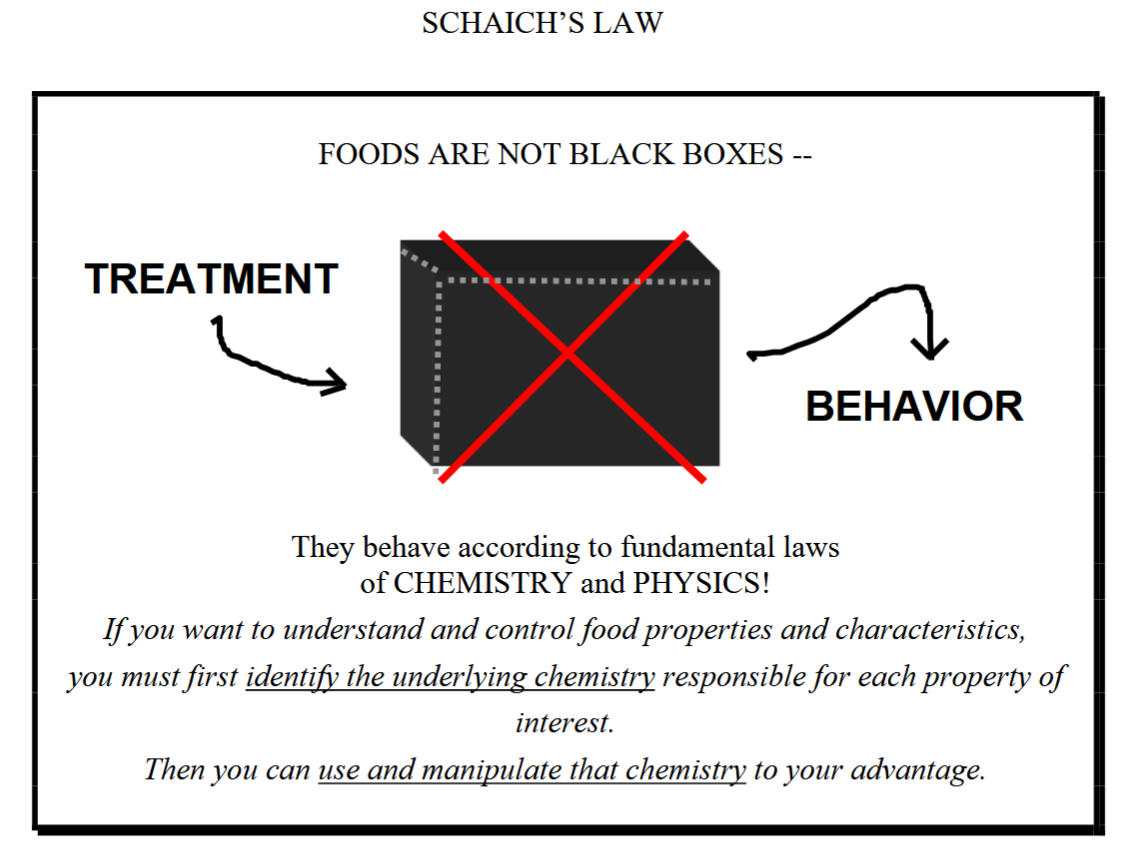
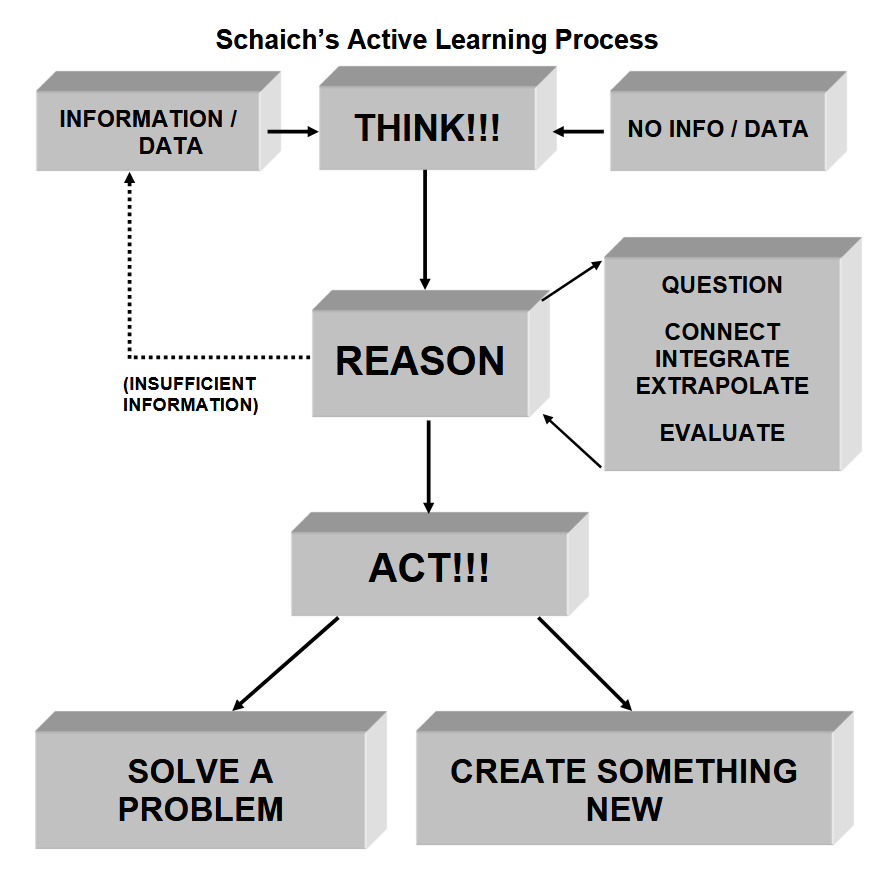
Use this process to help you become aware of the complexities involved in learning and make learning a mindful, conscious process rather than a series of memorizations